Manuela Witthuhn murder
I'll Be Gone in the DarkThe Manuela Witthuhn murder, discovered in Irvine on February 6, 1981, became an early point in a chain of investigations that eventually connected separate killings in Orange County. The circumstances of the discovery and evidence at the home raised questions about the killer’s identity and helped Jim White recognize similarities with another case.
Discovery and Setting
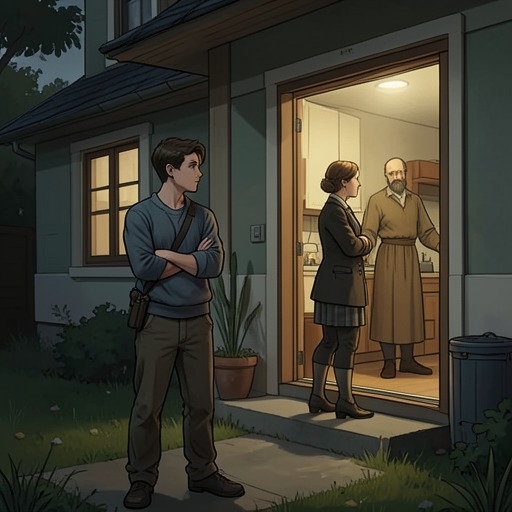
Manuela Witthuhn and her husband, David, lived at 35 Columbus, in a single-story home in Northwood, then a new Irvine development spreading across the former Irvine ranch. In early February, David was admitted to Santa Ana–Tustin Community Hospital with a severe gastrointestinal illness. Manuela visited him in the evenings and spoke with him by phone each day. On Friday, February 6, David could not reach her at home, so he called her mother, Ruth, who went to the house and entered with her key. She then summoned Ron Sharpe, a close family friend. After police had processed the scene and the house was released to David’s brother, Drew, the closed front door no longer concealed the bedroom from view: the murder had become an immediate, intimate reality for the family.
Evidence at the Scene and Competing Interpretations
Manuela was found in the bedroom, partly wrapped in a sleeping bag. Marks around her wrists and ankles indicated that bindings had been removed. A large screwdriver lay on the patio near the rear sliding door, whose lock had been pried open. Investigators also found that a nineteen-inch television had been carried to a corner of the backyard beside a wooden fence that appeared disturbed, while small-circle shoe impressions marked the front and back yards and the top of the gas meter. Together, these details suggested both deliberate entry and activity around the house before the killing.
The scene offered clues that seemed to point in different directions. Jewelry was missing, the television had been moved, and the answering-machine tape was gone; David speculated that the killer might have removed it because his voice had been recorded. Yet the screwdriver had been left behind, an odd choice for a burglar. Some Irvine investigators wondered whether Manuela had known the killer and whether the apparent break-in had been staged to disguise a personal encounter. Others doubted that she knew him. The missing lamp beside the bed sharpened the physical reconstruction: its square stand and chrome, cannonball-shaped light were gone, and police believed it was the heavy object used to kill her.
The investigation also uncovered evidence that the house had been watched before the murder. Interviewed the day after Manuela’s body was found, David recalled unexplained footprints from October or November 1980. He remembered a tennis-shoe sole with small circles and sketched it for police, unaware that investigators had a plaster cast of an impression made by the killer while stalking the house on the night of the murder. The sketch matched the cast. The comparison turned an earlier, puzzling trace into evidence that someone had approached the home months before the killing.
Jim White’s Wider View
Jim White, a criminalist with the Orange County Sheriff’s Department, processed the scene alongside Investigator Veach. He collected flaky mud beside the bed, swabbed a diluted bloodstain in the bathroom, and documented the evidence as Manuela’s body was examined. The work tied careful preservation of individual traces to a larger investigative question: whether an Irvine killing that seemed rare to local police belonged to a pattern visible across county lines.
In the laboratory, White compared paint from the screwdriver left at the house with common commercial products. The closest match was Oxford Brown, a store-mixed paint made by Behr. His perspective extended beyond Irvine because the county’s police departments relied on the Sheriff’s Department crime lab; White had processed scenes from Santa Ana to San Clemente. Six months after the murder, reviewing the evidence led him to suspect a connection to the killings of Keith and Patty Harrington. Both cases involved middle-class couples attacked in bed, victims bludgeoned with objects taken from their homes, and murder weapons removed by the killer. The women had also been raped, and both cases showed evidence of ligatures. In Manuela’s case, the bindings were gone, unlike the cord pieces found in and around the Harringtons’ bed—a difference White understood as possible evidence that the offender had adapted his methods.
The cases also shared a circumstantial medical connection: Keith Harrington was a medical student at UC-Irvine, Patty worked as a nurse, and David had been hospitalized in Santa Ana when Manuela was killed. These parallels did not establish a link on their own, but White retained his suspicion. Fifteen years later, when criminalist Mary Hong was assigned to cold cases, he urged her to prioritize the Harrington and Witthuhn investigations. Their DNA profiles were among those successfully developed from unsolved cases, and Hong confirmed that the two matched. As 1996 drew to a close, a spreadsheet comparison led her to identify an additional profile with the same sequence. The murder’s significance thus widened beyond the initial Irvine investigation: preserved evidence gave investigators a way to test a connection that White had carried forward for years.
Cold-Case Context
The later review formed part of a countywide effort to revisit unsolved homicides: from 1972 through 1994, Orange County investigated 2,479 homicides and cleared 1,591, leaving nearly 900 unresolved. Investigators prioritized cases involving sexual assault because repeat offenders were more likely to leave biological material suitable for DNA typing. By late 1996, the comparison Hong was undertaking drew on roughly twenty unsolved cases with usable profiles, each represented by five PCR markers. That framework made the Witthuhn evidence valuable beyond its original scene: preserved traces could be assessed alongside evidence from other cases, rather than remaining isolated clues in an Irvine file.